
Why Does My Scar Feel Tight, Hard, or Stuck? Scar Massage Dunedin, FL


Why Does My Scar Feel Tight, Hard or Stuck?
A scar feels tight, hard, or stuck because the collagen fibers formed during tissue repair lay down in a dense, disorganized pattern rather than the pliable, parallel structure of healthy skin and fascia. When this healing tissue tethers to deeper muscles, nerves, or connective layers, it creates restricted internal adhesions and localized fibrosis that limit normal glide and range of motion.
What You May Be Experiencing Around Your Scar
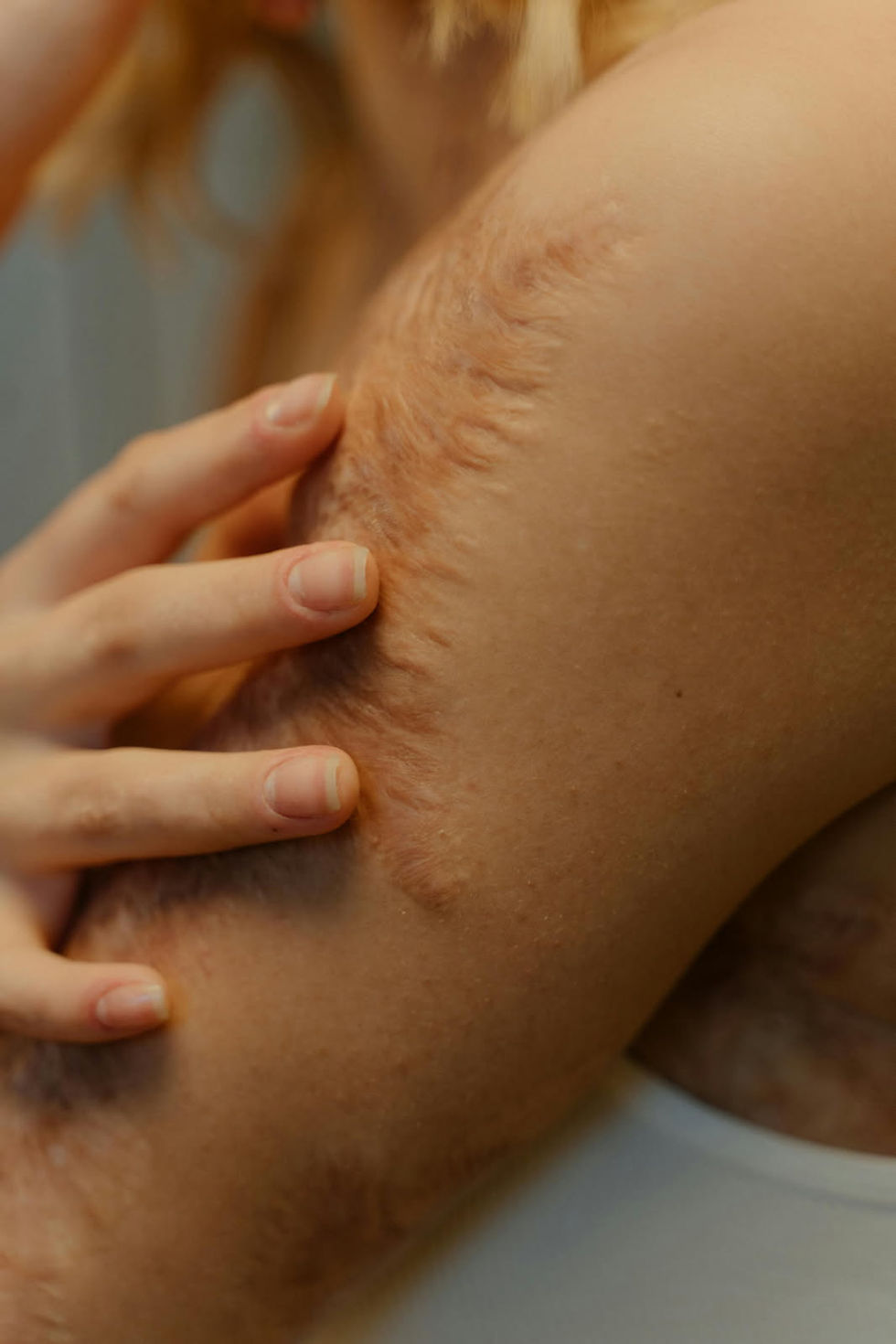
Whether your scar is from a recent surgery, a laparoscopic incision, a C-section, or an injury from years ago, scar tissue often behaves differently from the rest of your skin. You might notice:
A raised, firm, cord-like texture under the skin when you run your fingers along the incision.
A pulling sensation whenever you stretch, twist, or reach.
Localized puckering, tethering, or dimpling where the scar seems glued to the tissue beneath it.
Sensations of numbness, hypersensitivity, or mild aching along the edges of the incision line.
Why Does It Happen? The Science of Tissue Adhesion

During the body’s acute wound-healing phase, specialized cells called fibroblasts produce collagen rapidly to close the injury site. Unlike healthy skin—where collagen fibers are neatly organized in an elastic, basket-weave matrix—healing tissue is laid down like tangled threads to seal the area quickly.
As the scar matures, two common issues can develop:
Internal Adhesions: The healing scar bonds not just across the skin's surface, but down into the subcutaneous fat, deep fascia, and underlying muscle layers. This eliminates the natural lubrication and sliding motion between anatomical layers.
Tissue Fibrosis & Thickening: An overaccumulation of collagen can create hypertrophic scar formation or localized fibrosis, leaving the tissue stiff, dense, and resistant to normal movement.
How Manual Scar Tissue Therapy Can Help
Targeted manual therapy works to reintroduce functional movement into restricted tissue. While scar tissue cannot be erased entirely, specialized bodywork may help to:
Restore Fascial Glide: Slow, precise manual pressure helps uncouple superficial scar tissue from deeper muscular and fascial layers, easing that persistent "tethered" or "stuck" feeling.
Softens Dense Fibrosis: Mechanical stimulation promotes circulation and lymphatic flow, helping to remodel stiff collagen fibers into more pliable tissue.
Desensitize Hypersensitive Nerves: Gentle touch and specialized sensory re-education can help calm overactive local nerve endings or awaken numb zones surrounding the incision.
Relieve Compensatory Strain: Freeing restrictions at a scar site often relieves tension and discomfort that has radiated to other areas of the body.
When Medical Clearance Matters
Scar tissue work should always respect your body’s natural healing timeline.
Manual therapy directly over a surgical incision must only begin once the wound is 100% closed, fully scab-free, and cleared of any active infection or drainage. For most standard surgical procedures, this occurs roughly 4 to 8 weeks post-surgery, and direct work should always be performed with the clearance of your surgeon or physician.
(Note: Gentle surrounding lymphatic support may often be introduced earlier in the recovery process to address post-operative swelling, but direct scar manipulation requires fully intact skin.)
Frequently Asked Questions
Can you break up scar tissue years after an injury or surgery?
Yes. Collagen tissue remains responsive to mechanical input and manual therapy long after an incision has healed. While old scars may require consistent work, manual release techniques can often improve tissue pliability, ease pulling sensations, and restore lost mobility even years down the road.
What is the difference between normal scar tissue and an adhesion?
A normal scar forms within the skin layers to repair a cut or incision. An adhesion forms when the inflammatory healing process causes separate layers of tissue (such as the skin, fascia, and underlying muscle) to stick together, preventing them from sliding freely past one another during movement.
Does scar tissue release therapy hurt?
No. Effective scar tissue massage works within your threshold of comfort. Aggressive friction can provoke inflammation and trigger further fibrotic thickening. Sessions rely on slow, sustained pressure and gentle fascial stretching rather than painful force. Including microcurrent therapy, such as Avazzia microcurrent therapy or Frequency Specific Microcurrent, can be very beneficial and helps to minimize discomfort.
Ready to Restore Mobility and Ease?
If a tight, hardened, or pulling scar is restricting how comfortably you move, targeted scar release therapy can help re-establish healthy tissue glide.
Written by:
Nicole Longwell, LMT, CMLDT
Licensed Massage Therapist
Certified Manual Lymphatic Drainage Therapist
Medical Massage Therapy serving Dunedin, Clearwater, Oldsmar, Palm Harbor, Safety Harbor, Ozona, Seminole, Tampa, Pinellas, and Hillsborough Counties, FL.



Comments