
Why do Pilates Roll-ups and Roll-downs

Updated: Dec 24, 2025
In Pilates, roll-downs and roll ups have been one of the basic exercise taught to begin learning how to engage the spine, pelvis, and abdominal muscles. It has become the a pivotal part in core strength and stability. Many exercise programs have left out this piece when teaching the traditional sit-up or crunch, often leaving one open to injury, extreme muscle tension or strain in various areas of our bodies, to compensate for using the wrong muscles to perform the exercises. While the exercises are still effective, the roll-ups and roll-downs help to lay the foundation for using the correct muscles and using them properly.
🧘♀️ How to Do a Pilates Roll-Down on the Floor — Benefits, Technique & Tips
The Pilates roll-down is a foundational mat exercise that helps mobilize the spine, strengthen the core, improve posture, and enhance mind-body awareness. In the video demonstrated above, you learn how to perform this movement correctly while lying on the floor, focusing on controlled spinal articulation rather than momentum.
Unlike traditional exercises that focus on isolated muscle activation, the Pilates roll-down encourages every vertebra of the spine to articulate individually, creating space between spinal segments and promoting flexibility. This slow, deliberate movement also activates the deep abdominal muscles and encourages proper posture — benefits that transfer to everyday activities like sitting, lifting, and walking. Tom's Guide
🌀 Why Pilates Roll-Downs Matter
Pilates founder Joseph Pilates emphasized mindful movement and spinal articulation as keys to overall body mechanics. Roll-downs target the deep core muscles — including the transversus abdominis — which support the spine and stabilize the torso. Performing roll-downs regularly can help:
Improve spinal mobility
Strengthen core musculature
Reduce muscle tension in the back and neck
Enhance posture and alignment
Increase breath awareness and control Tom's Guide

📍 How to Do a Pilates Roll-Down (Floor Version)
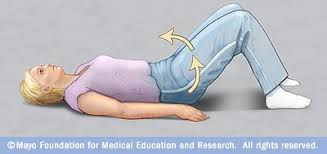
Start lying on your back with knees bent and feet flat on the mat, hip-width apart.
Inhale deeply while lengthening the spine and relaxing the shoulders away from the ears.
Exhale slowly as you initiate a gentle curl of your spine towards the floor — one vertebra at a time — allowing the lower back to round and the rib cage to move toward your pelvis.
Pause at the bottom of the roll-down, feeling the stretch along your back and the activation of your abdominals.
Inhale and begin to roll back up with control, stacking your spine vertebra by vertebra until you return to the starting position.
The important cues are slow, controlled movement, core engagement, and breath coordination. You should feel the work come from your deep abdominal muscles, not from pulling with your arms or straining your neck. Tom's Guide
🧠 Tips for Better Form
Focus on “peeling” your spine off the mat rather than lifting quickly.
Use imagery like rolling over a beach ball — imagining each vertebra articulating softly and evenly.
If your hamstrings feel tight, keep knees slightly bent to maintain comfort and alignment.
Exhale fully during the curl and breathe into the back body when you reach deeper spinal flexion. Tom's Guide
📈 Incorporating Roll-Downs Into Your Routine
Pilates roll-downs are excellent as part of a warm-up, a core strengthening segment, or a daily mobility routine. Even a few slow repetitions — performed mindfully — can ease back stiffness, boost posture control, and enhance your overall Pilates practice.



Comments