
How Soon After Surgery Can You Start Scar Tissue Massage? Scar and Fibrosis therapy in Dunedin, FL


As a general clinical rule, direct scar tissue massage after surgery and microcurrent therapy can safely begin once your incision is 100% closed, completely free of scabs, and cleared by your surgeon—which typically occurs between 4 to 8 weeks post-operation. While indirect recovery therapies like manual lymphatic drainage can often begin much sooner to reduce swelling, direct manual manipulation over the scar requires fully remodeled, intact skin to avoid tissue disruption.
The Stages of Surgical Healing (And When Touch Is Safe)
Understanding your body's biological repair timeline helps clarify why timing matters so much for post-operative bodywork:
Weeks 1–3 (The Acute Inflammatory & Proliferative Phase):
Your body is actively generating new cellular scaffolding and delicate capillary beds to close the wound. Direct friction or pressure over the incision is contraindicated during this stage. However, gentle Manual Lymphatic Drainage performed away from the incision site can often be utilized early on to encourage fluid reabsorption and reduce uncomfortable post-surgical swelling.
Weeks 4–8 (The Remodeling Phase Begins):
Once stitches or surgical staples are removed and the surface scabs naturally slough away, fibroblasts continue to deposit collagen fibers. This is the optimal window to introduce gentle, superficial scar tissue massage with physician clearance, guiding collagen remodeling before dense adhesions cement. Frequency-specific microcurrent and Avazzia microcurrent may also be introduced during this phase.
Months 2–12+ (Mature Remodeling):
Collagen fibers continue contracting and cross-linking for up to a full year (or longer). Deeper fascial gliding and adhesion release techniques can be utilized to address persistent tethering, firmness, or restricted movement.
Checklist: Is Your Scar Ready for Direct Manual Work?
Before scheduling direct scar tissue massage after surgery, your incision should meet the following safety criteria:
Full Surface Closure: There must be zero open areas, weeping, fluid drainage, or raw spots.
No Remaining Scabs: The surface must be continuous skin. Massaging over scabs can reopen delicate tissue and increase infection risk.
No Active Signs of Infection: The area should not exhibit abnormal heat, spreading redness, sudden sharp pain, or purulent discharge.
Physician or Surgical Clearance: Your surgeon or primary care provider should confirm that the deep structural repairs are stable enough for external mechanical manipulation.
How Scar Tissue Massage After Surgery Supports Recovery
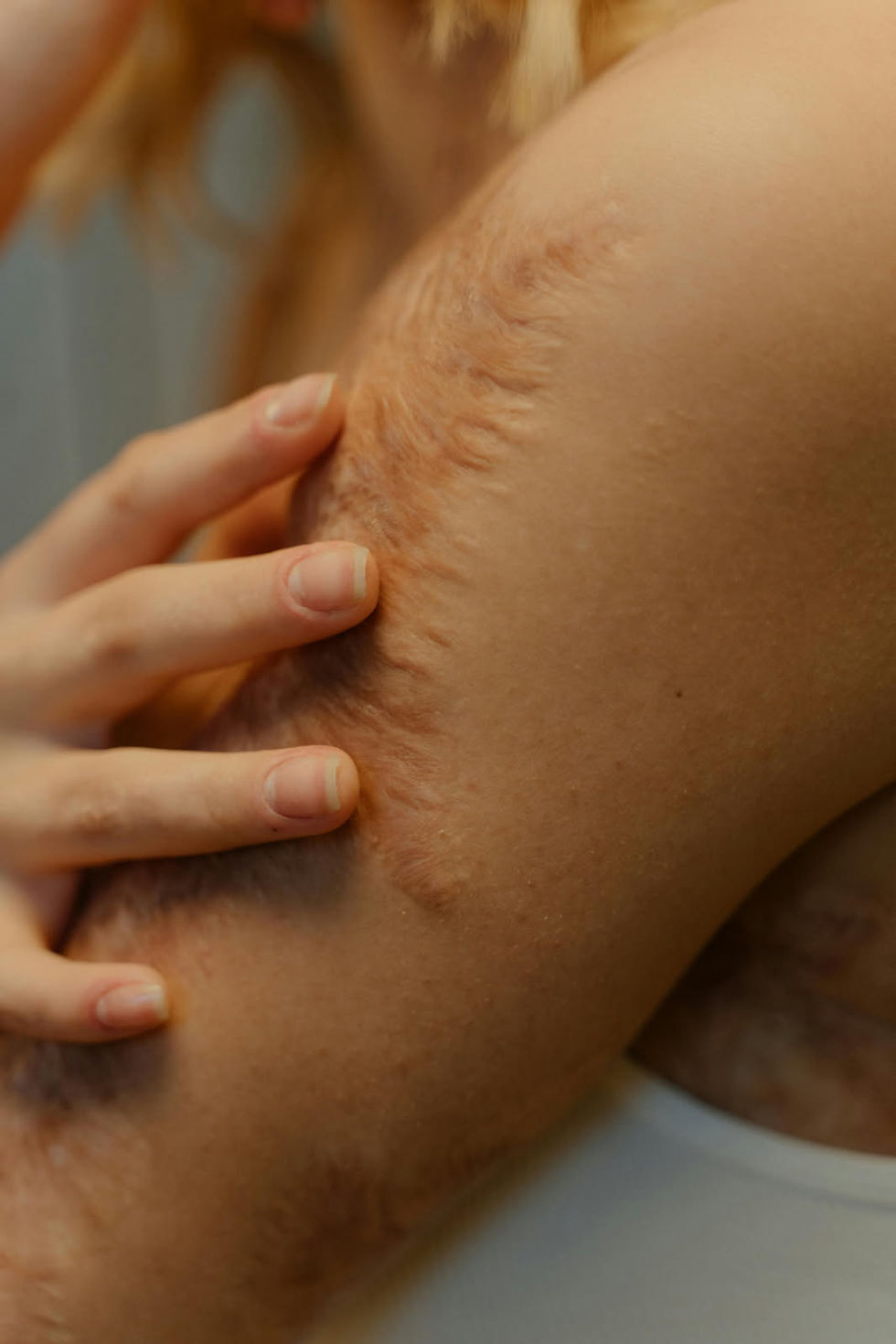
When an incision heals, collagen fibers lay down in a dense, crisscrossed pattern rather than the supple, parallel arrangement of uninjured skin and fascia. Left unaddressed, this tissue can tether the skin to deeper fascia, muscles, and nerves.
Receiving professional Scar Tissue & Adhesion Release therapy can support your recovery by:
Restoring Inter-Tissue Glide: Targeted, multi-directional manual pressure helps uncouple the scar from underlying muscle layers, reducing that tight, "stuck" sensation.
Softening Dense Fibrosis: Gentle mechanical mobilization stimulates local circulation, assisting the body in remodeling stiff fibrotic cords into pliable, mobile tissue.
Desensitizing Local Nerves: Surgical incisions sever microscopic cutaneous nerve endings, which can leave the skin hypersensitive, itchy, or numb. Specialized sensory re-education helps restore normal touch tolerance.
Preventing Compensatory Strain: When a scar limits local movement (such as an abdominal, knee, or shoulder incision), surrounding joints and muscles overcompensate. Improving scar flexibility helps restore balanced biomechanics.
Enhancing Scar & Fibrosis Care with FSM and Avazzia Microcurrent
For incisions prone to excessive density, persistent swelling, or stubborn adhesions, advanced electro-therapeutic modalities can provide gentle, non-invasive support alongside manual bodywork.
Frequency Specific Microcurrent (FSM) uses dual-channel, micro-amperage electrical currents calibrated to match the natural electrical resonance of specific tissues; targeted frequency pairs are utilized to help reduce localized inflammation, soften dense fascial tethers, and encourage cellular-level tissue remodeling.
Complementing this, Avazzia microcurrent technology delivers interactive, biofeedback-controlled neuro-stimulation that interacts directly with the nervous system and deep fascia. This gentle stimulation is used to calm hypersensitive peripheral nerves, soothe post-surgical guarding patterns, and soften stubborn fibrotic tissue without requiring forceful mechanical pressure—making both technologies particularly beneficial for individuals navigating sensitive scars, post-surgical fibrosis, or restricted fascial layers.
Frequently Asked Questions
What happens if you start scar massage too early?
Massaging an incision prematurely can disrupt delicate collagen bridges, cause wound dehiscence (reopening the edges), provoke acute inflammation, or introduce bacteria that could lead to an infection. It is always better to wait for complete wound closure and medical clearance.
Is it ever too late to start scar tissue therapy?
No. While earlier intervention during the first year of healing helps guide collagen formation, mature scar tissue remains biologically responsive to mechanical touch and fascial stretching years or even decades later.
Does scar tissue massage feel painful?
No. Effective post-surgical scar work is generally not painful, but there may be areas that are sensitive, tender, or may cause minor discomfort if there is still any residual inflammation. Applying excessive force triggers a protective muscle-guarding response and inflammatory reaction. Sessions prioritize slow, calibrated, and comfortable fascial engagement.
Support Your Recovery with Specialized Scar Care in Dunedin
If your surgical incision is healed, cleared, and ready for therapeutic support, gentle manual therapy can help you regain comfort, range of motion, and tissue ease. Whether you are recovering from orthopedic surgery, an abdominal procedure, a C-section, or specialized chest and pelvic reconstruction, individualized scar tissue work supports natural tissue mobility, decreases nerve irritation, and helps you feel at home in your body.
Written by:
Nicole Longwell, LMT, CMLDT
Licensed Massage Therapist
Certified Manual Lymphatic Drainage Therapist
Medical Massage Therapy serving Dunedin, Clearwater, Oldsmar, Palm Harbor, Safety Harbor, Ozona, Tarpon Springs, Seminole, Tampa, Pinellas, and Hillsborough Counties, FL.



Comments