
Pelvic Floor Health - Self Treatment

Updated: Feb 3
🧘♀️Pelvic Floor Health — What It Is & Why It Matters
The pelvic floor is an essential group of muscles and connective tissues that form a supportive “hammock” at the base of the pelvis. These muscles play a vital role in supporting the bladder, bowel, and (in females) reproductive organs, as well as contributing to continence, core stability, posture, and sexual function. Most people don’t think about their pelvic floor until symptoms like leakage, pain, or tension arise.
Video discussions about pelvic floor health, like the one linked above, often emphasize that the pelvic floor does much more than just “stop urine.” It works in coordination with the diaphragm, deep core muscles, and hip stabilizers to manage intra-abdominal pressure and support everyday movements like walking, lifting, and sitting.
When pelvic floor muscles are weak, tight, or poorly coordinated, it can lead to symptoms such as:
Urinary urgency or leakage
Bowel control difficulties
Pelvic or lower back pain
Pain with intercourse
Sensation of heaviness or pressure
Dysfunction during exercise or daily activities.
These issues often stem from a combination of muscle imbalances, nervous system patterns, and movement habits.
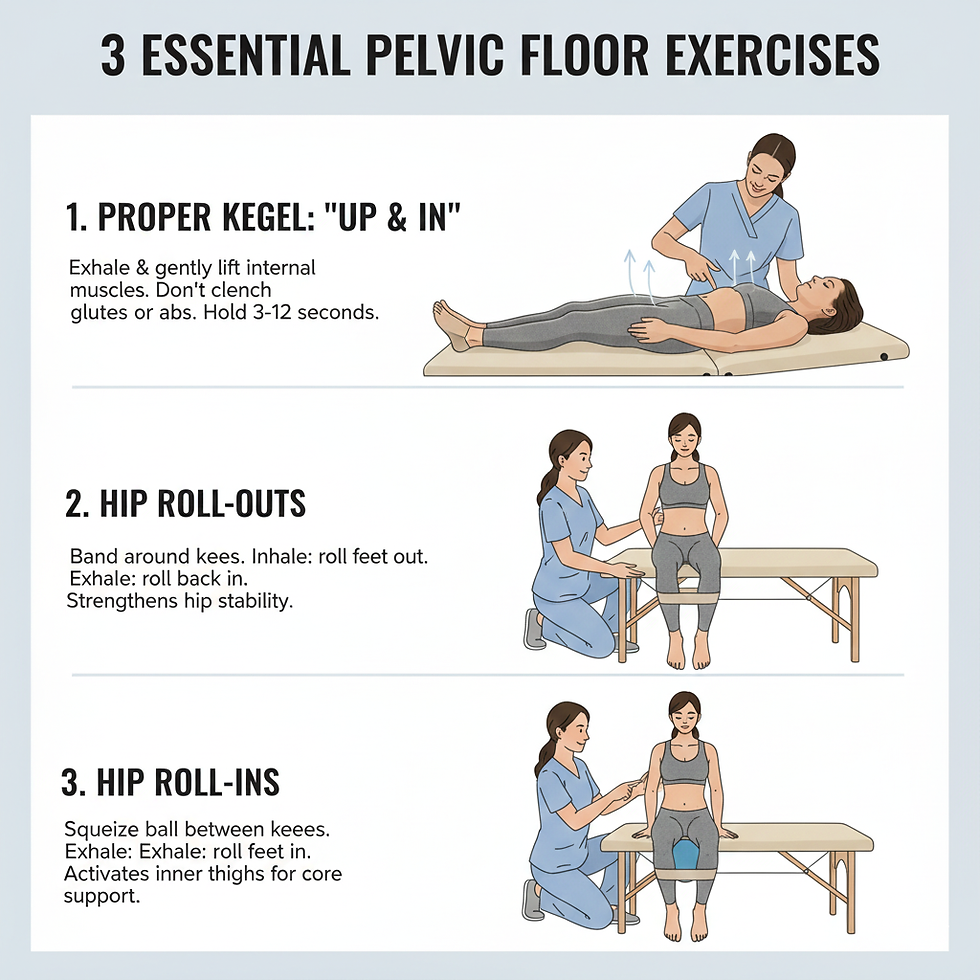
Improving pelvic floor health involves more than just isolated exercises like Kegels. It requires awareness of how the muscles work, learning proper activation and relaxation, and integrating movement with breathing and core engagement. Many healthcare professionals recommend training with a pelvic health specialist to ensure that exercises target the correct muscles and support overall function.
Whether your goals are to prevent incontinence, support postpartum recovery, improve athletic performance, or reduce pelvic tension, a balanced pelvic floor approach — including strength, flexibility, and coordination — can make a meaningful difference in your comfort and quality of life.


Comments